Open your restaurant’s back-office computer. What do you see?
I’m willing to bet it looks like a browser exploded.
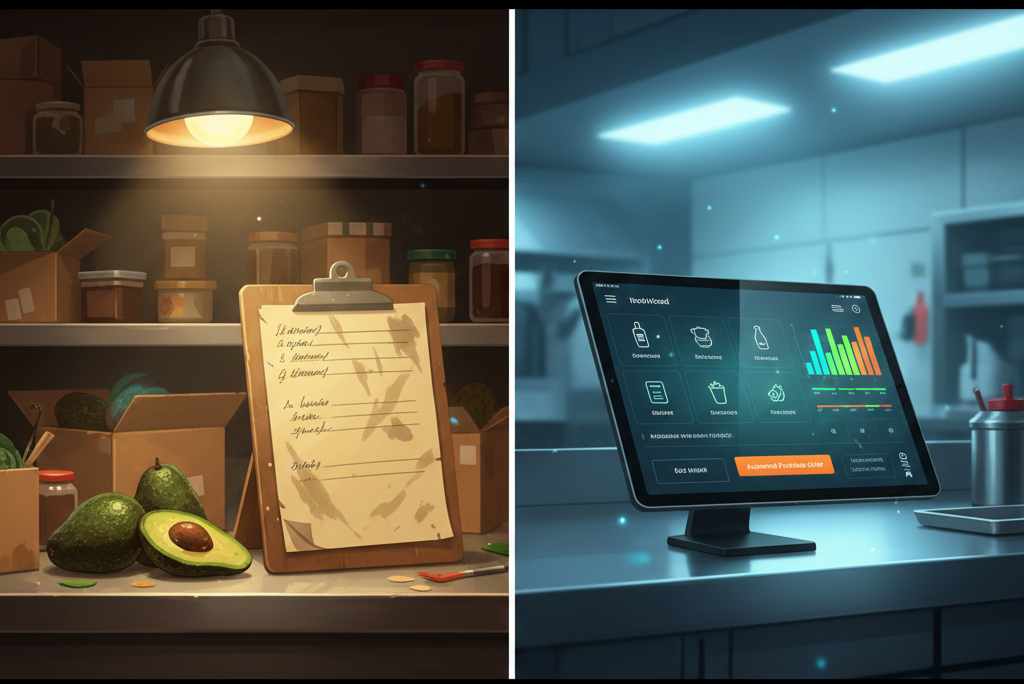
You have one tab for scheduling. Another for inventory. A third for your loyalty program. And let’s not forget the three different tablets sitting on the counter for delivery apps, buzzing like angry hornets.
This is the "Tech Stack Trap."
In 2025, there are thousands of restaurant technology companies pitching you the "next big thing." They promise that their specific app will save you time. But here is the tricky part: when you buy ten different "time-saving" tools that don't talk to each other, you actually lose time.
You don’t need more apps. You need sanity.
Let’s break down why the "Frankenstein" approach to tech is killing your efficiency, and why moving to a unified system like the nova pos is the only way to escape the trap.
The "Frankenstein" Problem
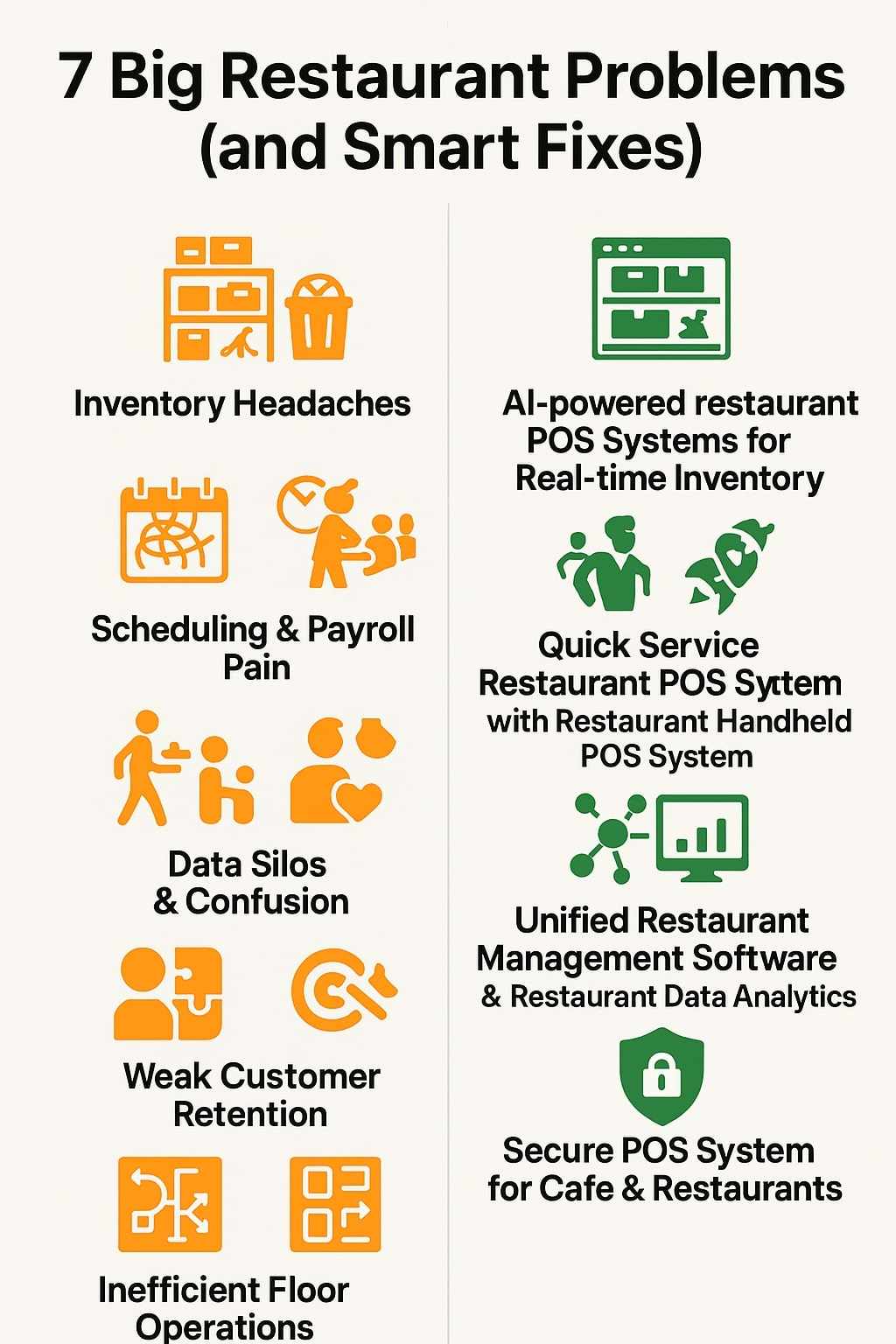
We have all been there. You buy a Point of Sale from Vendor A. Then you realize you need better inventory tracking, so you buy a boh system from Vendor B. Then you need online ordering, so you sign up with Vendor C.
Suddenly, you are the IT manager.
You spend your Friday nights trying to export a CSV file from one system and upload it to another just to see if you made money this week.
The Data Silo Nightmare
When your systems are fragmented, your data is trapped in silos.
Your marketing tool doesn't know what your kitchen ran out of.
Your restaurant webstore sells a steak that your inventory system knows is gone.
Your staff has to memorize four different passwords just to clock in and check prep lists.
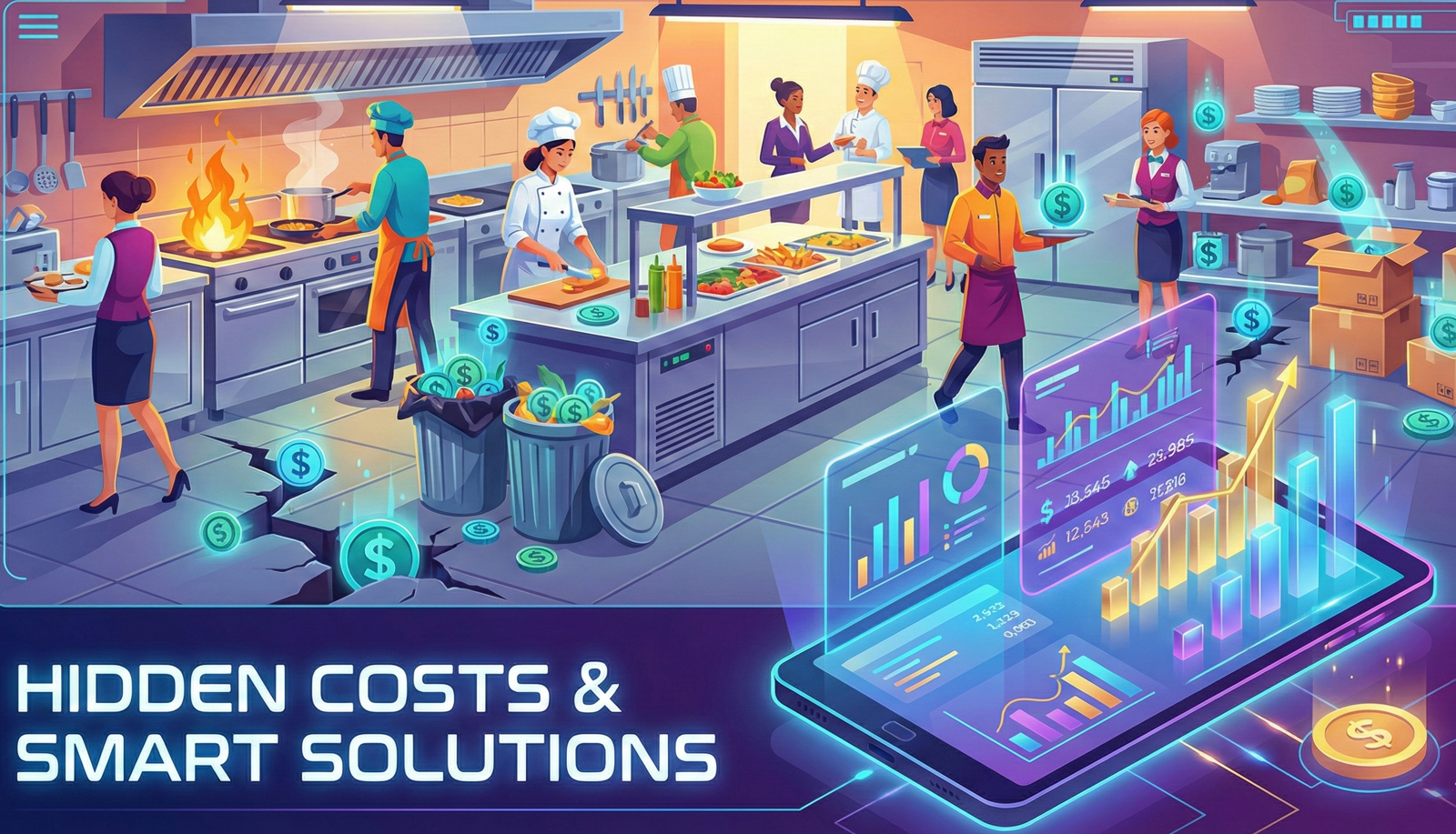
This isn't just annoying; it’s operational friction. And friction burns cash.
The Solution: The Unified Ecosystem
The smartest operators are doing the opposite of "stacking." They are consolidating.
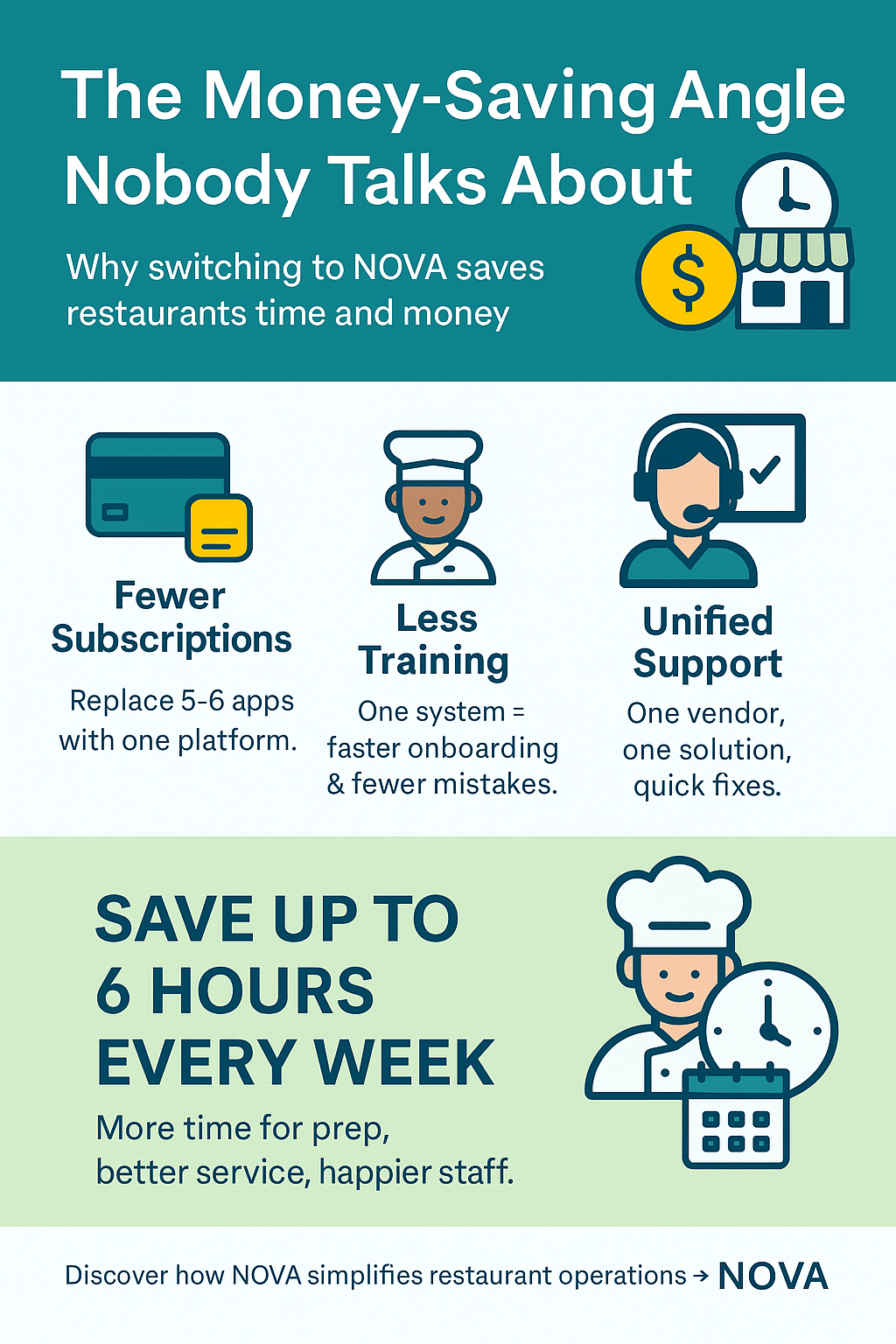
Instead of renting five different software licenses, they are moving to all-in-one platforms.
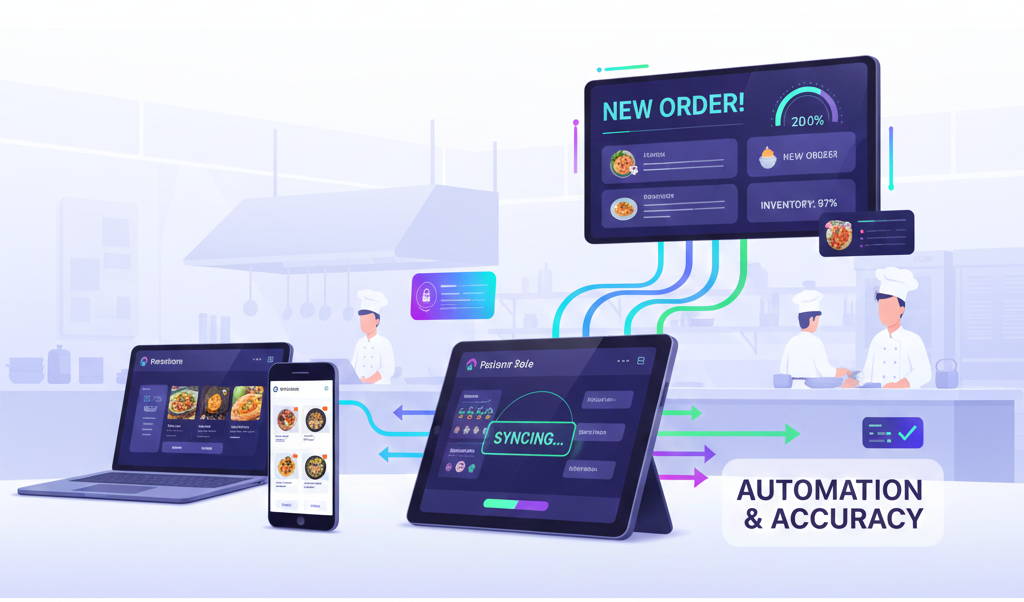
Think about the nova pos. It isn't just a register. It is a hub. When you ring up a burger, the system automatically:
Deducts the patty and bun from inventory.
Updates your sales report.
Adjusts the labor-vs-sales metric in real-time.
Updates your customer’s loyalty points.
It happens in one millisecond, without you lifting a finger.
Comparison: The "App Trap" vs. The Unified Platform
Let's look at the real cost of piecing things together.
Feature
The "Frankenstein" Stack
The Unified NOVA Platform
Login Fatigue
Staff forgets multiple passwords daily
One login for everything
Data Accuracy
"Sync errors" and manual entry
Real-time, single source of truth
Cost
High ($50 here, $100 there adds up)
Lower (bundled pricing)
Support
"Call the other vendor, it's their fault"
One phone number for help
Hardware
Cluttered counter ("Tablet Hell")
Streamlined (One screen + handhelds)
The Flow of Information
The biggest victim of the Tech Stack Trap is speed.
If you are a Quick Serve Restaurant POS user, you know that speed is life. You cannot afford to have a loyalty app that takes 30 seconds to load because it's trying to "handshake" with a third-party POS.
Native integration is faster.
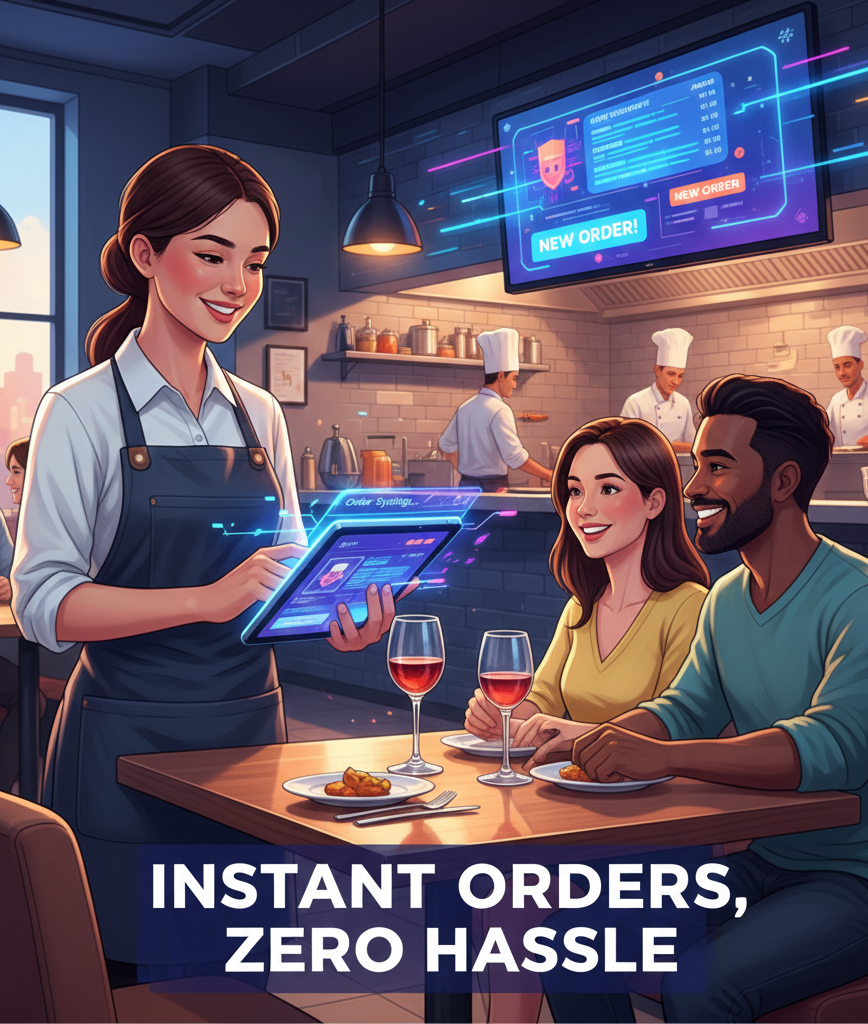
This applies to the dining room, too. With tableside ordering, the handheld device needs to be an extension of the kitchen. If it’s a third-party app running on an iPad, it might lag. If it’s native to the system, the ticket hits the kitchen before the server looks up.
"Simplicity is the ultimate sophistication. In the restaurant business, simplicity is also the ultimate profit protector."
Future-Proofing Your Business
Here is another reason to avoid the trap: The future is getting complex.
We are seeing the rise of vision ai in restaurants and automated voice ordering. These advanced tools need deep access to your data to work.
If you try to bolt an AI camera onto a disconnected, legacy tech stack, it simply won't work. By centralizing now on a modern platform, you are preparing your infrastructure for the next wave of automation, like voice ai for restaurants, without having to rip everything out in two years.
Actionable Steps to clean up your Stack
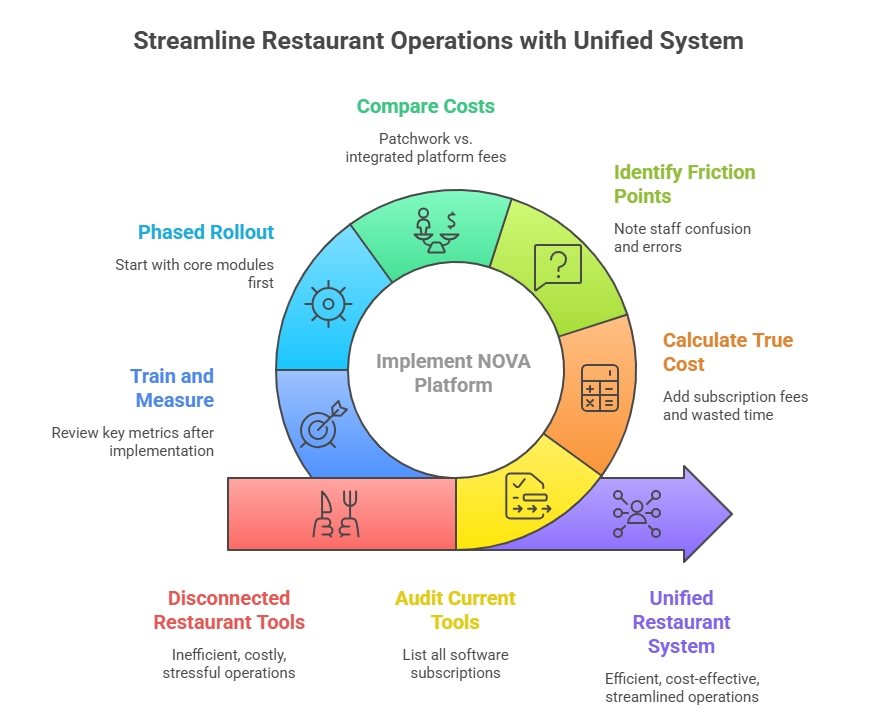
The "Zombie App" Audit: Look at your credit card statement. Highlight every software subscription. If you haven't logged into it in 30 days, cancel it.
Count the Clicks: Watch your manager close out a shift. If they have to open more than two browser tabs to finish paperwork, your stack is broken.
Demand Integration: If you are shopping for restaurant technology companies, ask them one question: "Is this feature native, or is it an integration?" Native is always better.
Unify the Menu: Ensure your back of house software controls the menu for all channels (dine-in, takeout, delivery) from one screen.
FAQs: Simplifying Your Tech
Q1. Why do so many restaurant technology companies push separate apps?
Answer: Because it’s easier for them to build one specific thing perfectly than to build an entire ecosystem. A company might build an amazing scheduling app, but they don't care if it integrates poorly with your POS. They want your subscription fee. Your job is to resist the shiny object syndrome and look for a platform that covers 90% of your needs natively, rather than buying 10 apps that each do 100% of one thing but don't talk to each other.
Q2. Is switching to a unified system like NOVA POS difficult?
Answer: It takes a little effort upfront, yes. You have to migrate your menu and customer data. However, think of it like cleaning out a messy garage. It’s a pain for one weekend, but then you can park your car easily for the next five years. The long-term efficiency gains massively outweigh the short-term setup time.
Q3. Will I lose "best-in-class" features if I consolidate?
Answer: Five years ago? Maybe. Today? No. Unified platforms have caught up. The native inventory tools inside modern POS systems are now just as robust as the standalone apps were a few years ago. Plus, the benefit of having that data actually connected to your sales figures is worth more than a few niche features you rarely use.
Q4. How does this help with labor costs?
Answer: It stops the "double entry" work. We see managers spending 5-10 hours a week just manually typing data from one system to another (like sales data into payroll). A unified system automates that. That is 10 hours of management salary you just saved, or 10 hours they can spend actually training staff and improving the guest experience.
Q5. Can I use my existing hardware?
Answer: It depends. If you are using generic iPads, often yes. But specialized proprietary hardware from legacy vendors usually has to go. However, moving to modern handheld ordering devices for restaurants and standardized screens is an investment that pays off quickly through faster table turns and fewer errors.
Final Thoughts
You got into this industry to feed people, not to become a systems administrator. Stop juggling a dozen different logins and paying a dozen different subscription fees. By consolidating your operations into a single, unified ecosystem, you regain control, reduce costs, and finally get the full picture of your business. Escape the trap. Simplify to scale.



Write a comment ...