Restaurant operations are a game of speed. Yet, a significant number of operators make critical financial decisions based on data that is days, or even weeks, old.
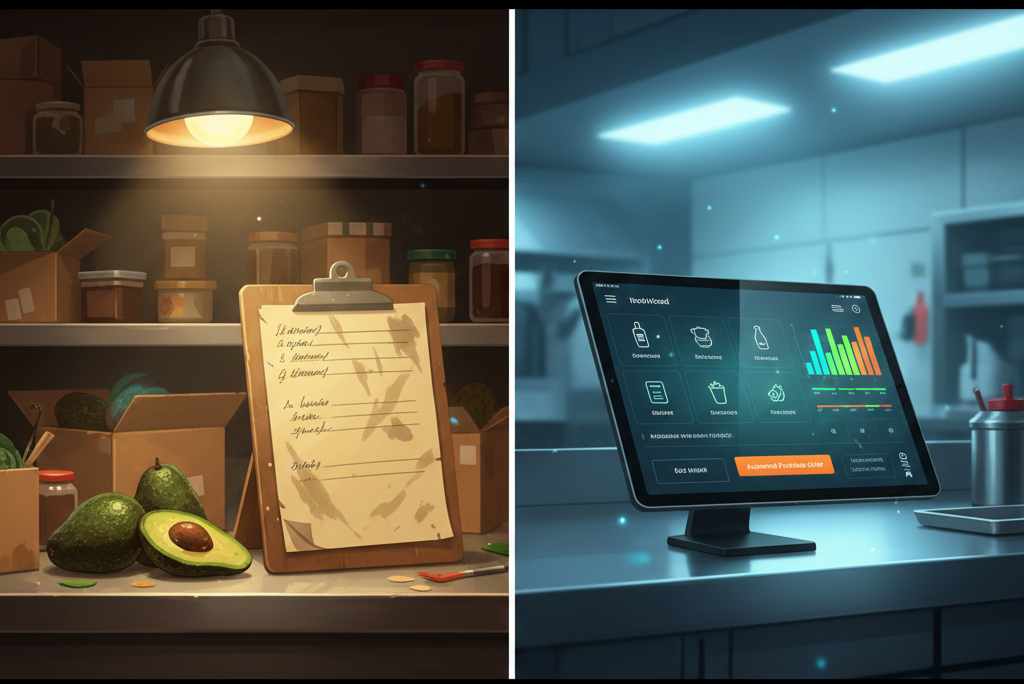
Managing a restaurant using last month’s Profit and Loss (P&L) statement is equivalent to driving a car while looking exclusively in the rearview mirror. By the time you identify a problem, the damage is already done.
The operational gap between "gut feeling" and data-driven management is widening. Successful operators in 2026 rely on integrated back of house software to visualize labor, inventory, and sales the moment they happen. Without this live visibility, you are likely making five specific errors every single shift—and paying for them in lost margin.
1. The Labor Cut Decision: Cutting Too Late (or Too Early)
The most volatile cost in any restaurant is labor. Managers often decide to cut staff or call in reinforcements based on how the dining room "feels" at that moment.
The Blind Spot
"Feeling busy" is subjective. A rush of drink orders might make a bartender look slammed, while sales per labor hour (SPLH) are actually plummeting because the kitchen is quiet. Without real-time data, managers often keep staff on the clock 30 to 60 minutes longer than necessary "just in case."
The Data-Driven Fix
A unified nova pos provides a live SPLH metric.
Scenario: Sales drop below $45 per man-hour at 8:15 PM.
Action: The system flags the variance. The manager cuts two runners immediately.
Result: You save $300 a week in unnecessary labor spread across multiple shifts.
2. The Purchasing Gamble: Over-Prepping Perishables
Food waste is the silent killer of profitability. Kitchen managers traditionally write prep lists based on historical averages or intuition. "We usually sell 20 steaks on a Tuesday."
The Blind Spot
Averages do not account for immediate anomalies, weather changes, or local events. If you prep for an average Tuesday but it rains, that inventory turns into waste. Conversely, if you under-prep, you risk 86ing high-margin items.
The Data-Driven Fix
Modern restaurant back of house software analyzes real-time consumption trends. It connects your current inventory levels with predictive forecasting. Instead of guessing, the system dictates the exact par levels required for that specific shift, reducing spoilage on high-cost proteins.
3. The "Ghost Menu" Error: Updating Availability Too Slowly
Few things damage guest trust faster than ordering an item that no longer exists. This issue is compounded when managing multiple channels: dine-in, takeout, and delivery.
The Blind Spot
A server sells the last sea bass in the dining room. However, the restaurant webstore and third-party delivery tablets are not updated for another 15 minutes. During that lag, three online customers order the sea bass. Now, staff must cancel orders and issue refunds.
The Data-Driven Fix
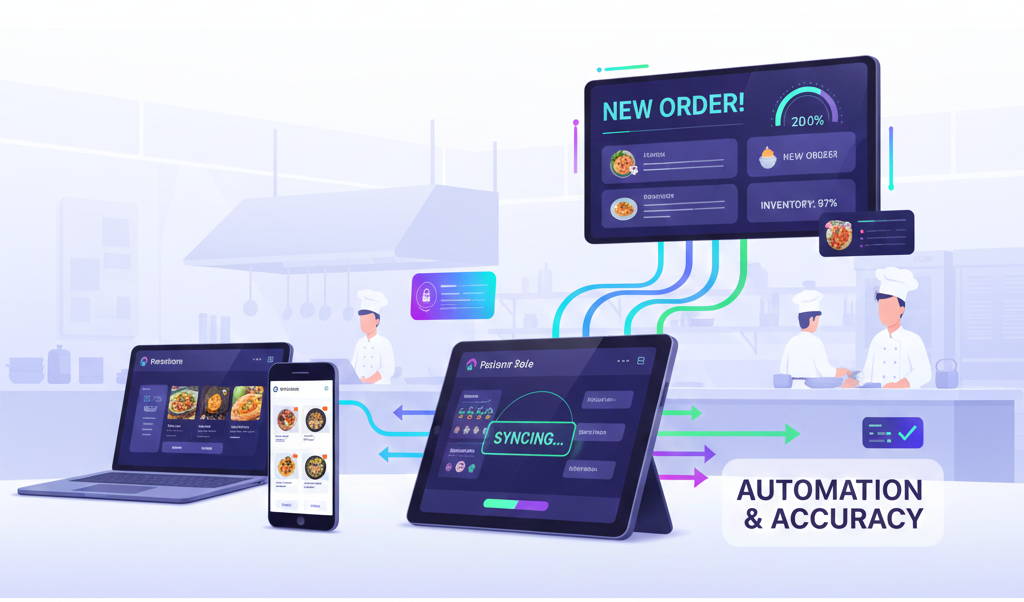
This requires centralized menu management. When an item is marked as "out of stock" on a nova point of sale, it must instantly synchronize across all digital platforms. This prevents negative reviews and the administrative cost of processing refunds.
4. The Marketing Miss: Reacting to Slow Shifts Too Late
Promotions are often planned weeks in advance, but restaurant volume is unpredictable. Operators without live data often realize a lunch shift was dead only after it is over.
The Blind Spot
You have excess inventory and an empty dining room at 12:30 PM. By the time you realize the trend, the lunch window has closed. The opportunity to drive traffic is lost.
The Data-Driven Fix
With real-time analytics, you can spot a 20% drop in foot traffic by 11:45 AM. This allows for immediate action, such as deploying a "flash sale" push notification via your loyalty app or enabling a limited-time offer on your Quick Serve Restaurant POS digital signage to increase ticket size for the few customers who are there.
5. The Service Bottleneck: Misallocating Staff
Are your ticket times dragging because the kitchen is slow, or because servers are taking too long to enter orders? Without data, managers usually blame the kitchen.
The Blind Spot
If a server holds three tables' worth of orders and punches them in all at once (batching), the kitchen gets slammed artificially. The manager sees a backed-up kitchen and blames the cooks.
The Data-Driven Fix
Using tableside ordering and analyzing input times reveals the truth. You can track exactly when a table was seated versus when the order was fired. If there is a 15-minute gap, the bottleneck is in the Front of House (FOH). This insight allows you to retrain staff on using handheld ordering devices for restaurants rather than hiring more cooks.
Comparison: Legacy Operations vs. Real-Time Operations
The following table contrasts the decision-making process between traditional methods and modern, data-integrated systems.
Operational Area
Legacy Method (Delayed Data)
Real-Time Method (NOVA Ecosystem)
Labor Management
Cut staff based on "gut feeling" or rigid schedules.
Cut staff based on live Sales Per Labor Hour (SPLH).
Inventory
Monthly counts; reactive ordering.
Perpetual inventory; predictive ordering.
Menu Changes
Manual updates across multiple tablets.
Single-click update across POS, Web, and Delivery.
Reporting
End-of-month P&L review.
Live dashboards accessible 24/7.
Waste Tracking
Paper logs (often forgotten).
Digital logging via boh system.
The Role of AI in Operational Decisions
The future of restaurant decision-making moves beyond simple reporting to predictive intelligence.
We are seeing the adoption of vision ai in restaurants to automate quality control. Rather than a manager manually checking plates, AI monitoring systems can flag inconsistencies in portion size or presentation before the food leaves the pass.
Similarly, voice ai for restaurants is transforming how data is captured. By automating phone orders, the system captures 100% of customer intent data without human error, feeding it directly into the analytics engine for better forecasting.
FAQs: Data-Driven Operations
Q1. Why is back of house software essential for cost control?
Answer: Back of house software is the only way to track theoretical versus actual food costs. Without it, you cannot identify where waste or theft is occurring. A POS records sales, but a boh system records usage. Comparing the two reveals your variance. For example, if you sold 10 burgers but used 15 patties, the software highlights the 5 missing patties immediately, allowing you to investigate and correct the issue before the next shift.
Q2. How does real-time data improve table turnover rates?
Answer: Real-time data identifies micro-delays in the service cycle. By analyzing timestamp data from handheld pos systems for restaurants, managers can see if the delay is in seating, order taking, cooking, or payment. If payment processing is the bottleneck, implementing pay-at-table solutions can shave 5-10 minutes off the turn time. This granular visibility turns vague problems into solvable metrics.
Q3. Can small restaurants afford enterprise-level analytics?
Answer: Yes. Cloud-based restaurant technology companies have democratized access to data. In the past, expensive servers were required. Now, SaaS (Software as a Service) models allow independent operators to access the same powerful dashboards as major chains for a monthly subscription. The ROI is typically realized within the first few months through labor and food cost savings.
Q4. What is the difference between a standard POS and a unified ecosystem?
Answer: A standard POS processes transactions. A unified ecosystem, like NOVA, integrates that transaction data with inventory, labor, and online ordering. In a unified system, a sale at the counter automatically deducts inventory in the boh system and updates the restaurant webstore. This eliminates the need for manual data entry and ensures all decision-making is based on a single source of truth.
Q5. How often should managers check their dashboards?
Answer: Managers should check "flash reports" periodically throughout a shift, ideally every 2-3 hours. Key metrics to monitor include Sales Per Labor Hour, current ticket times, and 86'd items. Waiting until the end of the night is an autopsy; checking during the shift allows for triage. Mobile-accessible dashboards make this easy to do without leaving the floor.
Stop Paying for Delayed Decisions
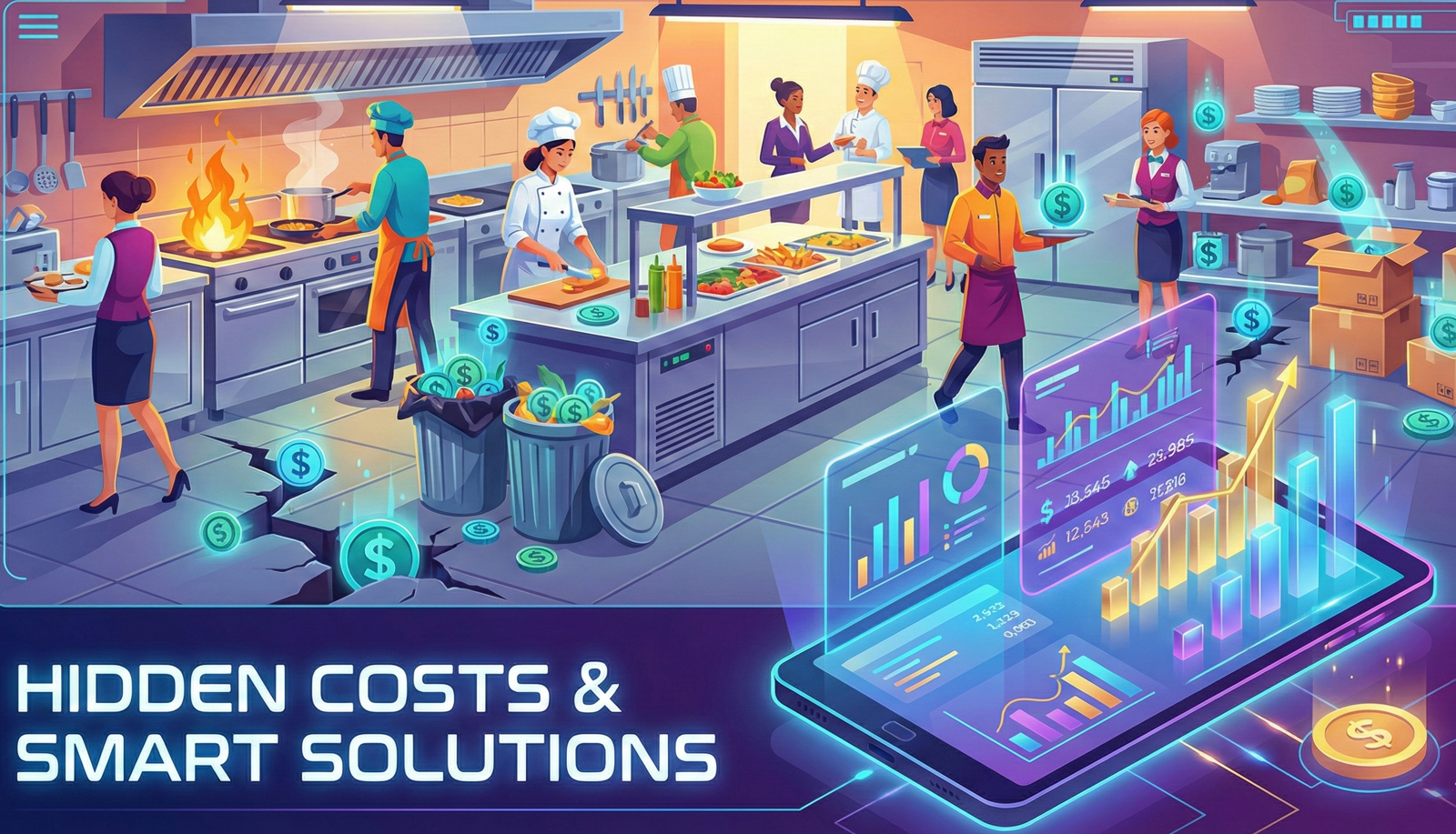
The cost of operational blindness is higher than the cost of the technology that solves it. Every shift run on "gut feeling" is a shift where margin is left on the table.
By implementing integrated tools—from Quick Serve POS systems to advanced BOH logic—you move from reactive chaos to proactive control. Upgrade your visibility, and you upgrade your bottom line.



Write a comment ...